This project showcases the development of a specialized training program for new Independent Correctional Adjudicators who are responsible for conducting disciplinary hearings for inmates under the legal and policy framework of BC Corrections.
Select step 1 on the map below to start. For the full journey map experience, use the expand button to view in full screen and turn the sound.
The training is designed for both lawyers and non-lawyer professionals who may bring strong legal, public service, or professional experience but often have limited familiarity with BC Corrections and the Adult Custody environment. The training transforms complex legal, regulatory, procedural, and operational source materials into a clear and structured learning experience. It helps adjudicators understand how correctional centres function, how the disciplinary process works, and the operational context needed to interpret the information, evidence, and situations presented during hearings. It also provides a single access point for the resources adjudicators need before beginning their role.
This program brings previously separate training content and resources together into a single, structured learning experience specifically designed for Independent Correctional Adjudicators. It also includes a new Adult Custody Orientation that introduces learners to the correctional environment, key roles and practices, and authentic perspectives from correctional officers through a lesson called Corrections in Action.
Because adjudicators conduct hearings virtually and may have limited opportunities to experience a correctional centre in person, AI-generated visuals were used to help learners visualize the physical and operational environment in which the events they hear about take place. AI images also helped to overcome difficulty in accessing secure areas without disrupting operations.
The Adjudication in Practice course also includes a branching scenario that simulates a virtual hearing. Learners make decisions and navigate key stages of the hearing process, creating an opportunity to apply their knowledge in a realistic, role-relevant context before conducting hearings independently.
One of the main challenges was transforming a large volume of highly technical legal, regulatory, policy, and operational source material into training that was clear and accessible without oversimplifying important legal concepts.
Another challenge was providing learners with meaningful context about Adult Custody when many adjudicators do not work inside correctional centres and conduct their hearings virtually. The project addressed this through a customized Adult Custody Orientation, authentic stories from correctional officers, and AI-generated visuals that help learners understand the environment behind the cases they will hear.
A further challenge was moving beyond content-based instruction to give learners an opportunity to experience the disciplinary hearing process before performing the role independently. A branching scenario was developed to simulate a virtual hearing and allow learners to practise navigating the process in a safe learning environment.
The project also addressed the need to organize essential policies, procedures, guides, and reference materials in one centralized location so that adjudicators can more easily access the resources required for their role.
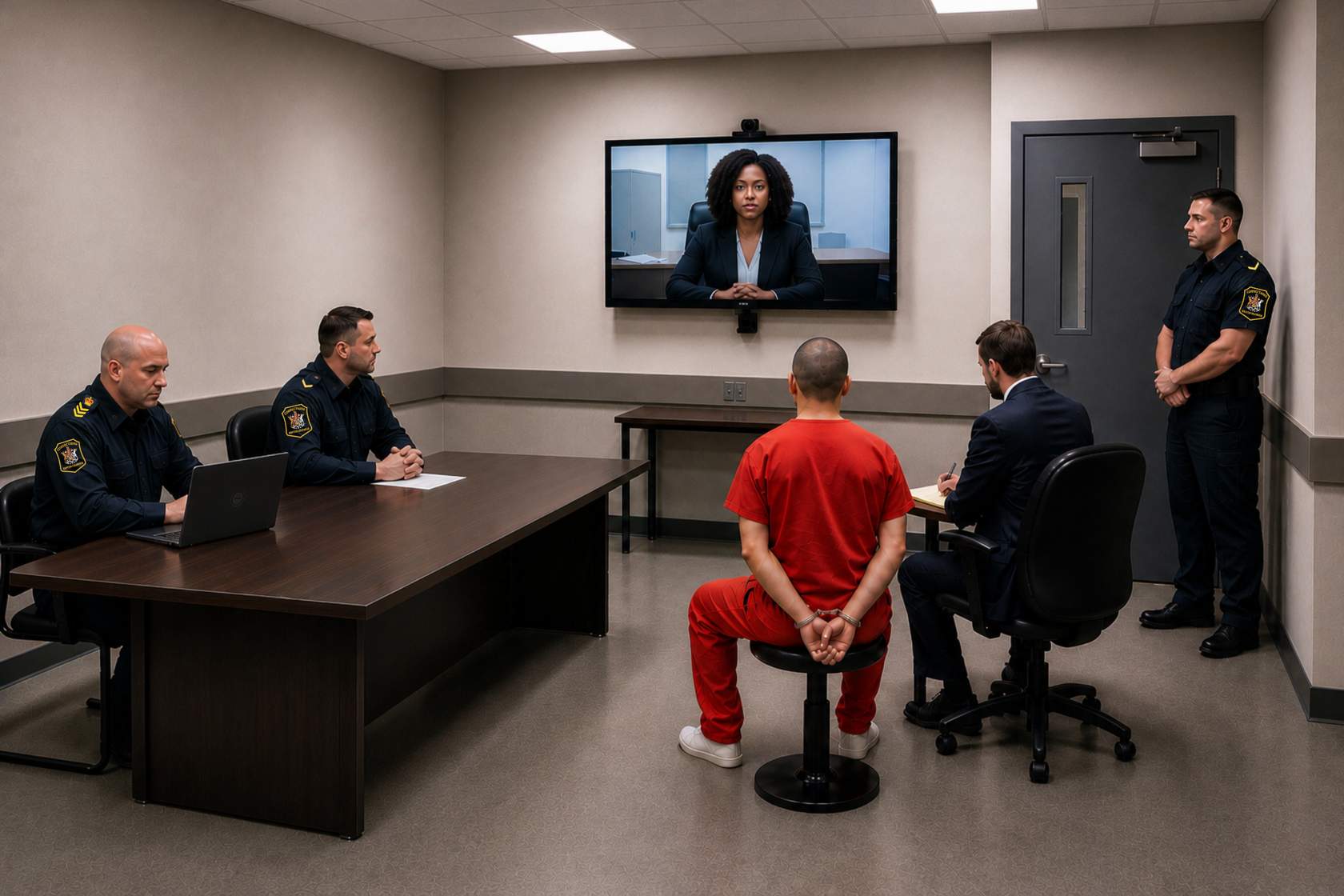
One of the key lessons learned was the importance of designing training around the learners’ actual work environment, not only the technical content they need to know. Although adjudicators may have strong legal or professional backgrounds, they still need clear context about Adult Custody operations, correctional practices, and the disciplinary hearing process. We also learned that complex legal and procedural material becomes more meaningful when it is supported by authentic stories, and opportunities to practise through scenario-based learning.
Additionally, AI images had a strong use case here. It was important to give new adjudicators a visual representation of the disciplinary hearing room, but gaining access to these secure areas would have been disruptive to BC Corrections operations.
Rise 360, Blackboard Ultra, AI image generation tools, Adobe Express, H5P
The project is currently in the pilot phase. Opportunities for future development of the hearing scenarios to be converted into CGI videos for a more immersive simulation and the potential use of pressbook tool in the training have been identified.