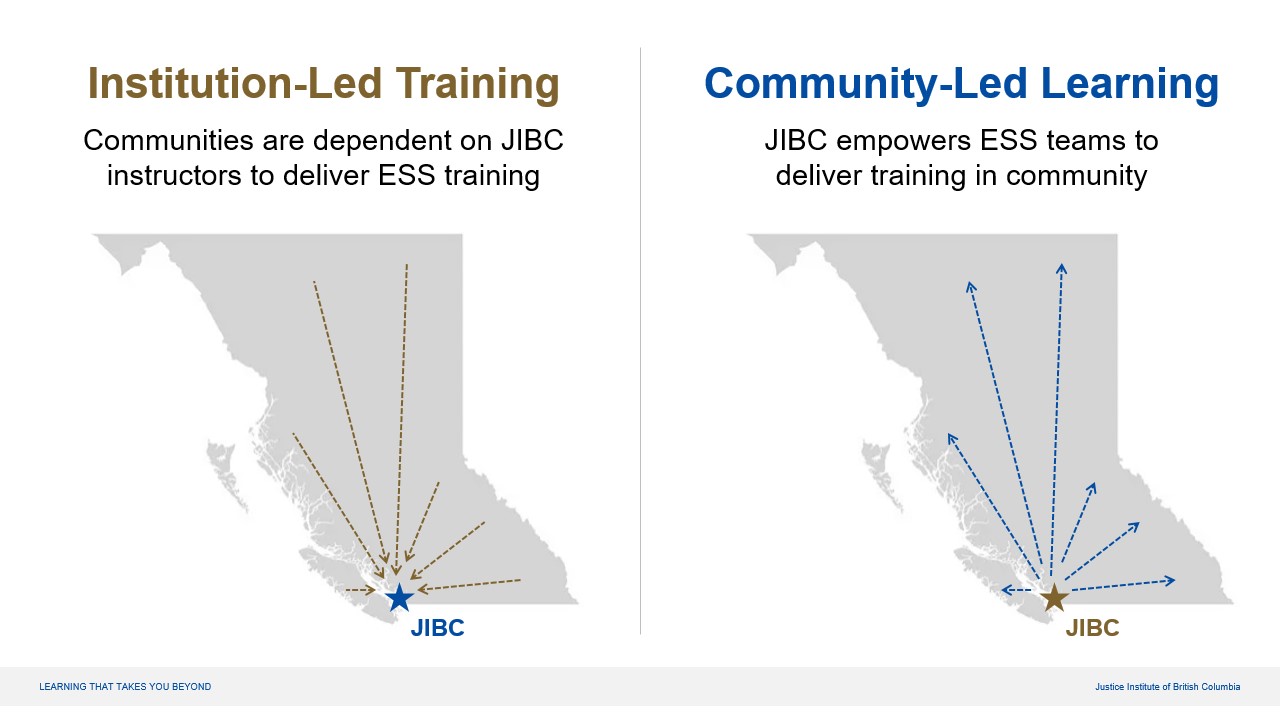
Community-led learning is a training approach that builds local capacity to facilitate introductory Emergency Support Services (ESS) training for responders and volunteers within their own communities.
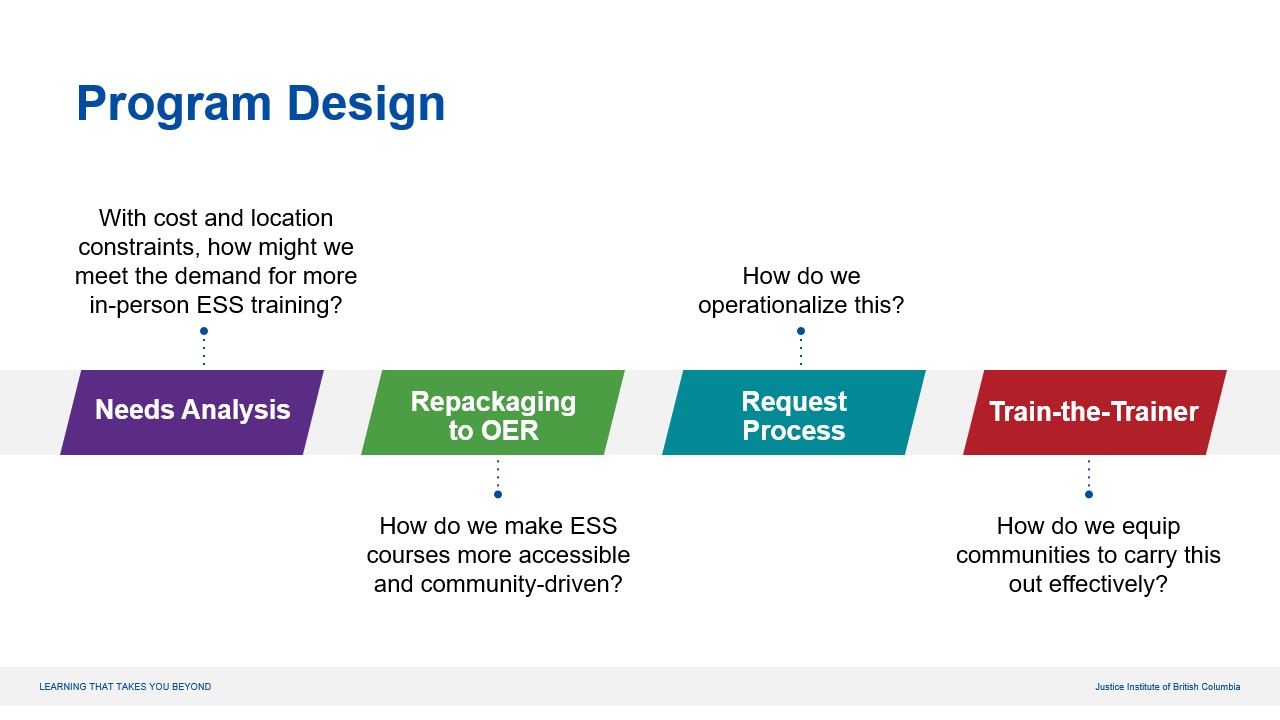
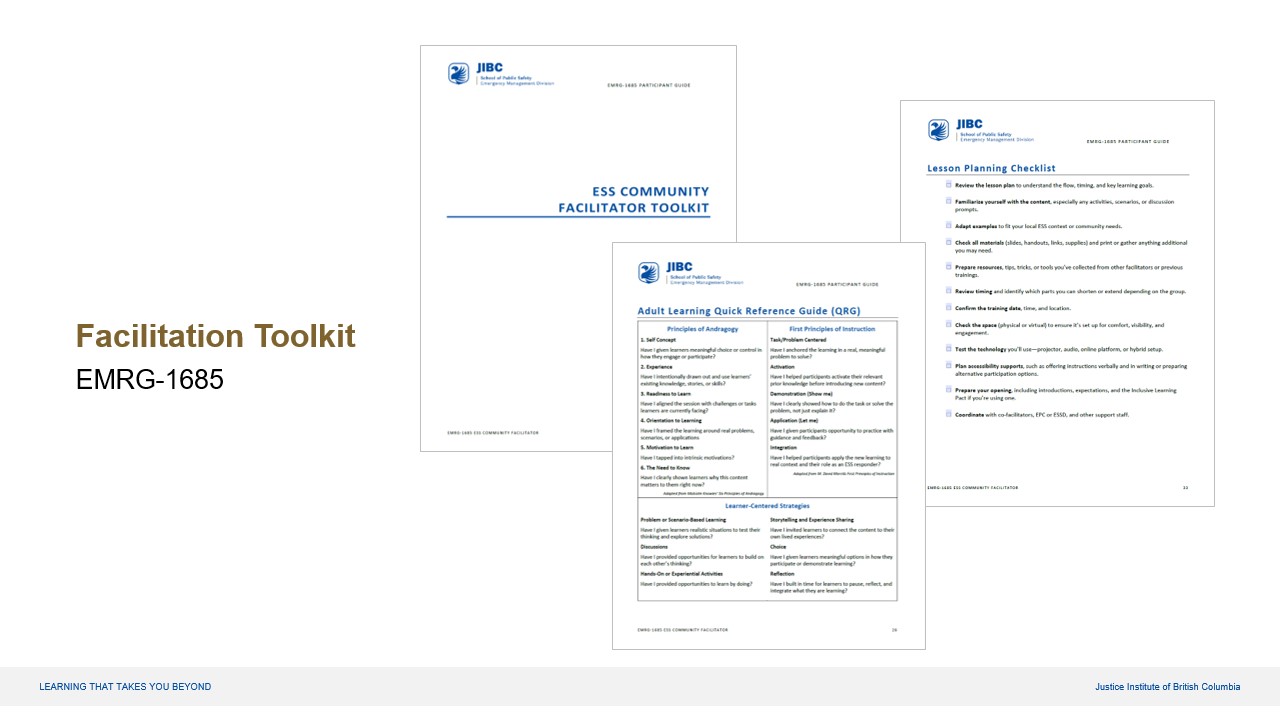
This project involved developing a sustainable process for communities to request and receive course materials from JIBC for the introductory ESS courses as well as a train-the-trainer course for ESS Community Facilitators.
Increase flexibility and accessibility to ESS training for responders and volunteers spread across the province.
Support community self-sufficiency so more training can be delivered locally and in a timely manner.Equip local ESS leaders, called ESS Community Facilitators, with the knowledge and skills to effectively deliver training for their ESS teams.
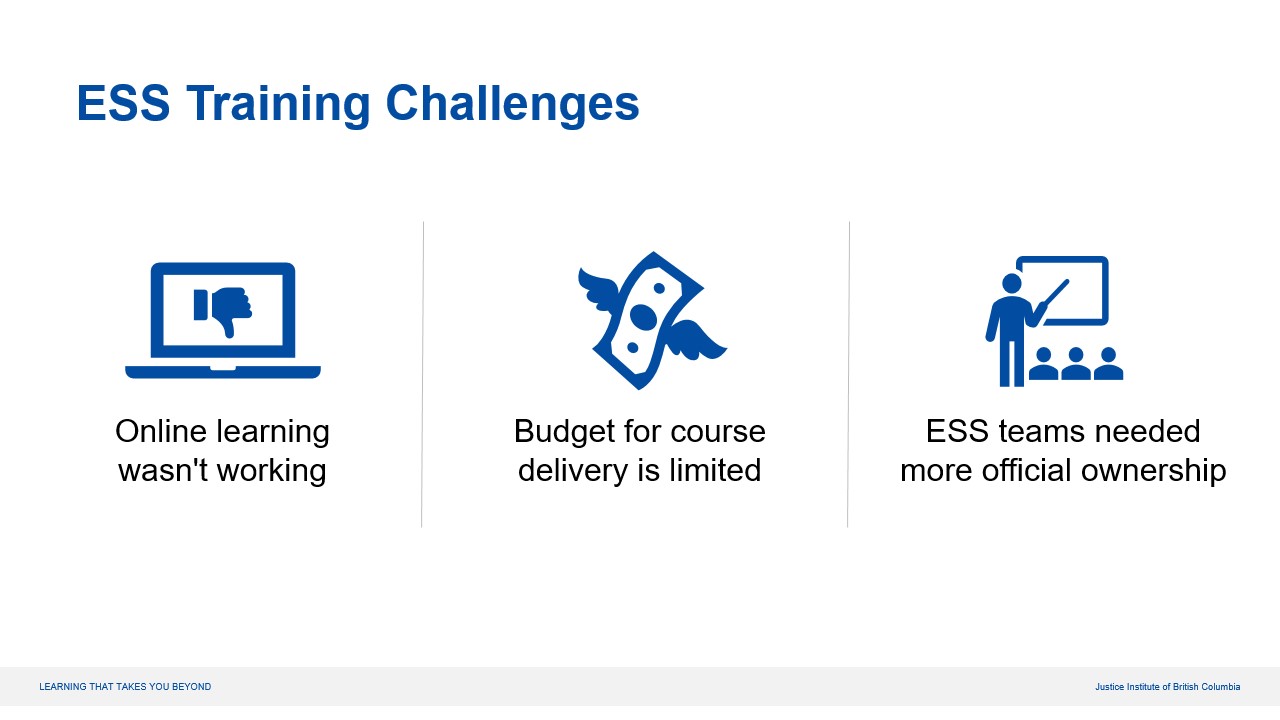
Provide a low-cost, scalable, face-to-face learning option for an audience who doesn’t like or can’t access online learning.
Respond to learner needs and community requests for in-person training.
Community-led learning demonstrates innovation because it addresses a common challenge for volunteer-based programs: providing flexible, accessible, and cost-effective training in diverse contexts and communities. It shifts training delivery away from JIBC as a sole provider of ESS training to empowering communities to drive their own training and adapt it to local contexts and needs.
Decision and process for turning ESS curriculum and course materials into open educational resources.
Curriculum design for a short course (2 days) that accommodates participants working full-time jobs.
Program considerations to distinguish between ESS community-led learning versus a JIBC course (i.e. instructor vs. facilitator roles, academic policies, etc.).
One of the biggest lessons learned was the importance of balancing local flexibility with standardized curricula to maintain a consistent learning experience across communities. A key part of this is training and supporting the local ESS Community Facilitators, as their confidence and capability are critical to the program’s success.
Qualtrics and website for course material request forms and distribution, Microsoft Word and PowerPoint for the course materials, Articulate Rise and Blackboard for the online train-the-trainer course (EMRG-1685 ESS Community Facilitator), and good ol’ in-person learning experiences!